


EVF Optical Module Blur? Fix Your Viewfinder Display Clarity
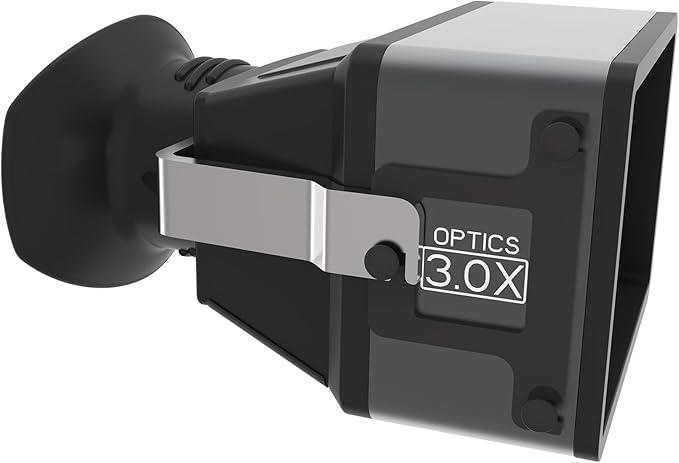
In the professional imaging and defense sectors of 2026, the EVF optical module (Electronic Viewfinder) has transitioned from a simple monitoring tool to a mission-critical interface. Whether integrated into high-end cinema cameras, thermal weapon sights, or medical endoscopes, the EVF must provide a perfect bridge between the digital sensor and the human eye. However, for B2B manufacturers, the shift toward micro-displays with higher pixel densities has introduced significant optical hurdles. The "problem" isn't the resolution of the display—it is the lens assembly's ability to maintain that clarity under real-world operational stress.
The Problem: Diopter Drift and Eyepiece Distortion
The primary frustration for engineers and procurement teams is the discrepancy between "bench-test" performance and field reliability. Most B2B hardware projects encounter three core technical failures in their EVF integration:
-
Thermal Diopter Drift: As the internal micro-display (often Micro OLED) generates heat, the plastic spacers and lens elements in the EVF optical module expand. This causes the focus to shift, forcing the user to constantly readjust the diopter during extended use.
-
Edge Smearing and Pupil Swim: Many compact EVF designs suffer from significant resolution drop-off at the periphery. For professionals—such as wildlife photographers or tactical operators—this "smear" makes it impossible to track moving subjects without moving their entire head.
-
Color Fringing (Chromatic Aberration): High-magnification eyepieces often struggle with white-point consistency, leading to "purple fringing" on high-contrast edges. In medical imaging, this can lead to the misinterpretation of critical visual data.
The Solution: High-Reliability Framework for Viewfinder Optics
To overcome these barriers, B2B manufacturers must move beyond standard lens stacks and adopt a solution-based approach centered on material stability and optical correction.
1. Implementing Zero-Expansion Glass-Hybrid Elements
The most feasible solution for thermal drift is the use of glass-plastic hybrid lens stacks. By incorporating at least one low-expansion glass element (such as ED or fluorite glass) at the core of the EVF optical module, you can anchor the focal plane. In 2026, the industry standard for high-end viewfinders involves using "athermalized" housing—materials specifically engineered to counteract the expansion of the lens elements—ensuring the diopter setting remains locked from -10°C to +50°C.
2. Utilizing Aspheric Eyepiece Geometries
To solve the issue of pupil swim and edge distortion, the integration of dual-sided aspheric lenses is essential. Unlike traditional spherical lenses, aspheric surfaces can be tuned to correct for field curvature across a wide Field of View (FOV). For an EVF with a 0.5-inch micro-display, this allows for a "large-window" effect where the image remains sharp even if the user’s eye is not perfectly centered on the optical axis. This significantly reduces eye fatigue during long-duration monitoring.
3. Advanced Nano-Coating for Contrast Retention
To eliminate color fringing and internal flare, the solution lies in multi-layer Broadband Anti-Reflective (BBAR) coatings. By applying these nano-coatings to every air-to-glass interface within the module, light transmission is increased to over 98%. This not only improves the brightness of the EVF without increasing power consumption but also eliminates the "veiling glare" that often washes out contrast in bright outdoor environments.
The Strategic Advantage of Modular EVF Design
Efficiency in 2026 is driven by modularity. For B2B companies, the most feasible path to scalability is the adoption of "self-contained" EVF modules that include the display, driver, and optics in a single calibrated unit. This reduces the burden on the primary device's thermal management and simplifies the assembly process. Mastering this integration allows manufacturers to pivot quickly between different hardware formats—from handheld cameras to helmet-mounted displays—without redesigning the optical path.
Conclusion
The future of professional imaging is defined by the clarity of the interface. By addressing the common pitfalls of thermal drift and edge distortion through glass-hybrid optics and aspheric lens design, B2B manufacturers can deliver an EVF optical module that meets the rigorous demands of 2026. As hardware continues to shrink and resolutions continue to climb, the organizations that prioritize these technical, feasible solutions will be the ones that dominate the high-end optical market. Focus on these precision-engineered strategies to ensure your viewfinder technology remains a benchmark for reliability and visual excellence.

 English
 Arabic
 Français
 Español
 Português
 Deutsch
 Türkçe
 Italiano
 Russian
 Romaian