


How Autonomous AI Agents Will Transform Work
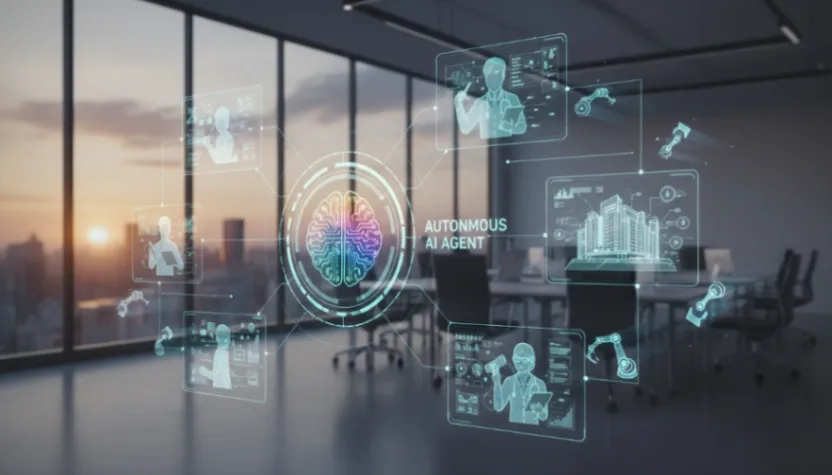
The way businesses operate is changing rapidly as artificial intelligence evolves from simple automation tools into intelligent systems capable of independent decision-making. Among the most significant innovations driving this transformation are autonomous AI agents. These advanced systems can understand goals, analyze information, make decisions, and execute tasks with minimal human intervention.
Unlike traditional software applications that require constant user input, autonomous AI agents can work proactively, adapting to changing conditions and learning from outcomes. Organizations across healthcare, finance, manufacturing, retail, logistics, and technology are increasingly deploying these agents to improve operational efficiency, reduce costs, and enhance customer experiences.
The growing adoption of autonomous AI agents represents a major shift in enterprise technology. Businesses are no longer looking at AI merely as a support tool; instead, they are integrating intelligent agents directly into workflows to perform tasks that previously required human involvement. This transition is creating new opportunities for productivity, innovation, and competitive advantage.
As organizations explore advanced AI solutions, understanding how autonomous AI agents work and how they will impact the future workforce has become essential for leaders, decision-makers, and technology teams.
What Are Autonomous AI Agents?
Autonomous AI agents are intelligent software systems designed to perceive their environment, process information, make decisions, and take actions independently to achieve specific objectives. Unlike conventional AI tools that rely on direct user commands, autonomous agents can operate continuously and proactively while adapting to changing circumstances.
Think of an autonomous AI agent as a digital employee rather than a software application. Instead of waiting for instructions, it can receive a goal such as improving customer response times, reducing inventory shortages, or generating sales opportunities and then determine the best sequence of actions required to accomplish that goal.
These agents combine multiple AI capabilities, including reasoning, planning, memory, and execution. They can interact with enterprise systems, access databases, communicate with users, and collaborate with other AI agents to complete complex workflows.
Modern autonomous agents are built on technologies such as artificial intelligence, machine learning, and advanced language models, enabling them to understand context and perform sophisticated tasks beyond simple automation.
Organizations looking to build intelligent business solutions often explore technologies discussed in Vegavid's guide on What Is Artificial Intelligence.
Evolution from Traditional Automation to Autonomous AI
The journey toward autonomous AI agents began with traditional automation systems. Early automation technologies focused primarily on repetitive tasks that followed predefined rules. Examples included invoice processing, payroll management, data entry, and workflow approvals.
While these systems improved efficiency, they lacked flexibility. Any change in process requirements often required manual updates and reconfiguration. Traditional automation could execute tasks but could not understand context or adapt to unexpected situations.
The next phase introduced intelligent automation powered by machine learning and predictive analytics. These systems could analyze historical data, recognize patterns, and make recommendations. However, they still required significant human supervision and intervention.
Today, autonomous AI agents represent the latest stage of this evolution. They combine automation with reasoning and decision-making capabilities. Rather than executing predefined workflows, they dynamically determine the most effective path toward achieving business objectives.
This progression mirrors the broader development of AI technologies explained in Vegavid's article on Types of Artificial Intelligence.
The shift from automation to autonomy is transforming how organizations think about digital operations. Businesses are moving from task automation to outcome-based automation, where AI agents focus on achieving goals rather than simply executing instructions.
How Autonomous AI Agents Work
Autonomous AI agents operate through a structured cycle that combines perception, reasoning, planning, execution, and learning. This process allows them to function independently while continuously improving performance.
The first stage involves collecting information from multiple sources. These sources may include enterprise software systems, databases, APIs, customer interactions, emails, documents, and external data feeds.
Once information is gathered, the agent analyzes context and determines the current situation. Using reasoning capabilities, it evaluates available options and identifies actions that align with its objectives.
After generating a plan, the agent executes tasks using connected systems and applications. It may send emails, update records, generate reports, process transactions, schedule meetings, or trigger workflows.
One of the most valuable features of autonomous AI agents is their ability to learn from outcomes. By evaluating results and incorporating feedback, agents improve future decisions and optimize performance over time.
For example, a customer service agent may analyze incoming support tickets, identify common issues, generate responses, escalate complex cases, and monitor customer satisfaction scores. Over time, the agent becomes increasingly effective at resolving inquiries quickly and accurately.
Core Technologies Behind Autonomous AI Agents (LLMs, ML, NLP, RAG)
The capabilities of autonomous AI agents are made possible through a combination of advanced technologies working together.
Large Language Models (LLMs)
Large language models serve as the reasoning engine behind many modern AI agents. These models can understand human language, interpret instructions, generate content, and solve complex problems.
By leveraging technologies similar to large language models, autonomous agents can communicate naturally with users and make informed decisions based on contextual information.
Machine Learning
Machine learning enables AI agents to recognize patterns, improve predictions, and optimize actions based on historical data.
Businesses interested in AI-driven learning systems can explore Vegavid's article on Machine Learning.
Natural Language Processing (NLP)
Natural language processing allows AI agents to understand, interpret, and generate human language. NLP enables chatbots, virtual assistants, customer support agents, and enterprise search solutions to communicate effectively.
Through NLP, autonomous agents can analyze sentiment, identify intent, extract information, and provide meaningful responses.
Retrieval-Augmented Generation (RAG)
Retrieval-Augmented Generation, commonly known as RAG, combines generative AI with external knowledge retrieval systems. Instead of relying solely on training data, RAG-enabled agents can access current information from enterprise databases, knowledge repositories, and documentation.
This capability is particularly valuable in industries where accuracy and real-time information are critical.
Knowledge Graphs and Context Management
Many advanced agents also utilize knowledge graphs to organize relationships between data points. These structures improve contextual understanding and support more accurate decision-making.
Key Characteristics of Autonomous AI Agents
Several characteristics distinguish autonomous AI agents from traditional software applications and conventional AI systems.
Goal Orientation: Autonomous agents focus on achieving outcomes rather than simply executing commands. They determine the actions required to reach predefined objectives.
Adaptability: These systems can respond to changing conditions and adjust strategies based on new information.
Context Awareness: Agents understand the broader environment in which they operate, allowing them to make more informed decisions.
Memory: Many autonomous agents retain information from previous interactions, enabling continuous improvement and personalized experiences.
Proactive Behavior: Rather than waiting for instructions, agents can initiate actions when opportunities or issues are detected.
Continuous Learning: Through feedback loops and machine learning, agents improve performance over time.
These characteristics make autonomous AI agents particularly valuable in dynamic business environments where conditions change rapidly and decision speed is critical.
Autonomous AI Agents vs Traditional AI Systems
Although both autonomous AI agents and traditional AI systems leverage artificial intelligence technologies, their capabilities differ significantly.
Traditional AI systems are typically designed to perform specific tasks. Examples include recommendation engines, image recognition systems, predictive analytics models, and basic chatbots. These systems excel at narrow functions but generally require human oversight and direction.
Autonomous AI agents, on the other hand, integrate multiple capabilities into a unified system. They can analyze information, formulate strategies, execute actions, and evaluate outcomes independently.
For example, a traditional chatbot may answer customer questions based on predefined responses. An autonomous customer support agent can understand customer intent, access account information, resolve issues, process refunds, update records, and follow up with customers automatically.
The distinction becomes even more apparent in enterprise environments. Traditional AI helps employees perform tasks more efficiently, while autonomous AI agents can take ownership of entire workflows and business processes.
Organizations exploring enterprise AI transformation often reference resources such as Artificial Intelligence Real World Applications to understand practical implementation opportunities.
As AI technology continues to advance, the gap between traditional AI systems and autonomous agents will continue to widen, making agent-based architectures a central component of future enterprise operations.
How Autonomous AI Agents Are Reshaping the Workplace
The workplace is undergoing one of the most significant transformations since the introduction of computers and the internet. Autonomous AI agents are changing how organizations manage operations, interact with customers, and make decisions. Unlike traditional software tools that assist employees with specific tasks, autonomous agents can independently handle entire workflows from start to finish.
As businesses face increasing pressure to improve efficiency while controlling costs, AI agents are becoming strategic assets rather than experimental technologies. They are helping organizations reduce manual workloads, eliminate operational bottlenecks, and enable employees to focus on higher-value activities.
Modern workplaces are increasingly structured around human-AI collaboration, where intelligent agents handle repetitive and data-intensive responsibilities while employees focus on creativity, relationship-building, innovation, and strategic planning.
This evolution is creating a new operational model in which digital workers and human workers collaborate to achieve business objectives more effectively than either could alone.
AI Agents for Workflow Automation and Task Management
Workflow automation has traditionally focused on repetitive, rules-based processes. Autonomous AI agents take workflow automation much further by introducing intelligence, adaptability, and decision-making capabilities.
Instead of simply following predefined instructions, AI agents can evaluate circumstances, prioritize tasks, coordinate resources, and adjust workflows dynamically based on changing business conditions.
For example, in a procurement department, an autonomous AI agent can monitor inventory levels, identify shortages, request supplier quotes, compare pricing options, evaluate delivery timelines, and initiate purchasing approvals automatically.
Similarly, in human resources, agents can manage candidate screening, schedule interviews, coordinate onboarding activities, and track employee documentation requirements without constant human oversight.
Organizations investing in intelligent automation often complement AI initiatives with modern software strategies discussed in Vegavid's article on Custom Software Development Benefits, Challenges, and Best Practices.
As workflow complexity increases, autonomous agents become increasingly valuable because they can manage exceptions and adapt to unexpected situations more effectively than traditional automation systems.
Impact on Employee Productivity and Efficiency
One of the most immediate benefits of autonomous AI agents is their impact on workforce productivity. Employees spend a significant portion of their workday performing repetitive administrative tasks that contribute little strategic value.
Activities such as scheduling meetings, preparing reports, updating records, searching for information, and responding to routine inquiries consume valuable time that could otherwise be dedicated to innovation and growth.
Autonomous AI agents help eliminate these inefficiencies by taking ownership of routine responsibilities. This allows employees to focus on activities requiring creativity, critical thinking, empathy, and strategic decision-making.
Research across industries consistently shows that productivity improvements are among the primary drivers of AI adoption. By reducing administrative burdens, organizations can achieve higher output without proportionally increasing workforce size.
In customer support environments, for example, AI agents can resolve common inquiries instantly, enabling human representatives to focus on complex issues that require personal attention.
Similarly, sales teams can spend more time building relationships and closing deals while AI agents handle lead qualification, prospect research, and follow-up communications.
The result is a workforce that becomes more efficient, engaged, and capable of delivering greater business value.
Role of Autonomous AI in Decision-Making
Modern organizations generate enormous amounts of data. The challenge is no longer collecting information but transforming it into actionable insights quickly enough to support effective decision-making.
Autonomous AI agents excel in this area because they can process vast datasets, identify patterns, evaluate alternatives, and generate recommendations in real time.
Unlike traditional analytics tools that require users to interpret reports manually, AI agents can actively participate in decision-making processes by providing recommendations and initiating actions.
For example, an AI agent monitoring supply chain performance can detect emerging disruptions, evaluate alternative suppliers, estimate financial impacts, and recommend mitigation strategies before significant problems occur.
Executives can also use AI agents to analyze market trends, customer behavior, operational performance, and competitive intelligence.
These capabilities are supported by technologies such as predictive analytics, which enables organizations to forecast outcomes and identify opportunities proactively.
As AI agents become more sophisticated, they will increasingly function as strategic advisors capable of supporting complex business decisions across departments and industries.
AI Agents in Customer Service, Sales, and Marketing
Customer-facing functions are among the most active areas of autonomous AI agent adoption. Businesses are leveraging intelligent agents to improve customer experiences while reducing operational costs.
Customer Service
Autonomous customer service agents can resolve inquiries, process requests, manage support tickets, and escalate complex cases when necessary. Unlike traditional chatbots that rely on scripted responses, modern agents understand context and can perform actions across multiple systems.
For example, a customer support agent can verify account information, process refunds, update shipping details, and schedule follow-up communications without requiring human intervention.
Organizations exploring conversational AI solutions often review resources such as Chatbot Development Company for Business.
Sales
Sales teams increasingly use AI agents to automate lead generation, prospect qualification, outreach campaigns, and pipeline management.
Autonomous sales agents can analyze customer data, identify buying signals, prioritize opportunities, and recommend next actions to improve conversion rates.
These systems help sales professionals focus on relationship-building and revenue generation while reducing time spent on administrative tasks.
Marketing
Marketing departments use autonomous agents to optimize campaigns, analyze audience behavior, personalize content, and improve engagement strategies.
AI agents can continuously monitor campaign performance and automatically adjust targeting, messaging, and budget allocation to maximize return on investment.
As digital marketing becomes increasingly data-driven, autonomous agents provide a scalable solution for managing complex multi-channel campaigns.
Autonomous AI Agents in Healthcare, Finance, and Manufacturing
While AI agents offer value across virtually every industry, certain sectors are experiencing particularly significant transformations.
Healthcare
AI Agents for Healthcare providers face ongoing challenges related to administrative complexity, staffing shortages, and growing patient demand. Autonomous AI agents help address these challenges by automating scheduling, documentation, patient communication, and care coordination.
AI-powered systems can assist with patient triage, appointment management, clinical documentation, and treatment recommendations while reducing administrative workloads for healthcare professionals.
These innovations align with broader developments in healthcare technology.
Organizations seeking healthcare-focused technology insights may also find value in Vegavid's article on Reasons to Hire a Custom Healthcare Software Development Company.
Finance
AI Agents for financial services industry has become a major adopter of autonomous AI technologies. Financial institutions use agents for fraud detection, risk analysis, compliance monitoring, customer service, and investment research.
Autonomous agents can continuously analyze transactions, identify suspicious activities, and trigger appropriate responses faster than human teams.
Financial organizations also leverage technologies associated with financial technology to improve efficiency and customer experiences.
Manufacturing
Manufacturers use autonomous AI agents to optimize production schedules, manage inventory, predict equipment failures, and improve supply chain visibility.
By integrating AI with industrial systems, organizations can reduce downtime, improve resource utilization, and increase operational efficiency.
The combination of AI and automation is helping manufacturers build smarter, more resilient operations capable of adapting to rapidly changing market conditions.
Benefits of Autonomous AI Agents for Businesses
The business benefits of autonomous AI agents extend far beyond simple automation. Organizations that deploy these systems effectively can achieve measurable improvements across multiple performance areas.
Increased Efficiency
AI agents automate repetitive activities and streamline workflows, reducing delays and improving operational performance.
Reduced Costs
By handling routine tasks autonomously, organizations can reduce labor costs while increasing output and service capacity.
Improved Customer Experiences
Faster response times, personalized interactions, and 24/7 availability contribute to higher customer satisfaction and loyalty.
Scalability
Unlike human teams, AI agents can scale rapidly to accommodate increasing workloads without significant additional costs.
Enhanced Decision-Making
Access to real-time insights and predictive capabilities enables organizations to make more informed business decisions.
Continuous Operations
Autonomous AI agents can operate around the clock, ensuring uninterrupted support, monitoring, and execution capabilities.
These benefits collectively contribute to stronger competitive positioning and long-term business growth.
Challenges and Risks of AI Agent Adoption
Despite their significant potential, autonomous AI agents also introduce challenges that organizations must address carefully.
Data Quality Issues
AI agents rely heavily on accurate and reliable data. Poor data quality can lead to incorrect decisions, reduced performance, and operational risks.
Integration Complexity
Many enterprises operate complex technology ecosystems containing legacy systems, cloud platforms, and third-party applications. Integrating autonomous agents across these environments can be challenging.
Governance and Accountability
Organizations must establish clear governance frameworks that define how AI agents operate, what decisions they can make, and how outcomes are monitored.
Security Risks
As AI agents gain access to sensitive systems and data, organizations must implement strong cybersecurity controls to prevent unauthorized access and misuse.
This concern becomes particularly important in industries handling regulated information and intellectual property.
Workforce Concerns
Employees may worry that autonomous systems could replace human roles. Organizations must address these concerns through transparency, communication, and workforce development initiatives.
Ethical Considerations
Businesses must ensure that AI agents operate fairly, transparently, and responsibly. Issues related to bias, explainability, and accountability require ongoing attention.
Organizations that proactively address these challenges will be better positioned to realize the full benefits of autonomous AI while minimizing potential risks.
Human-AI Collaboration: The Future of Work
Despite concerns about automation replacing human workers, the future of work is more likely to be defined by collaboration rather than substitution. Autonomous AI agents are designed to augment human capabilities, not eliminate them. The most successful organizations will be those that effectively combine human creativity, empathy, and strategic thinking with the speed, consistency, and analytical power of AI.
Humans excel in areas that require emotional intelligence, ethical judgment, relationship-building, innovation, and complex problem-solving. AI agents, on the other hand, are highly effective at processing large volumes of data, automating repetitive tasks, monitoring systems, and executing workflows at scale.
This complementary relationship creates a new workforce model where employees focus on high-value activities while AI agents manage operational execution. For example, marketing professionals can concentrate on brand strategy and creative campaigns while AI agents optimize targeting, analyze performance, and automate customer interactions.
Similarly, financial analysts can focus on investment strategy and risk assessment while autonomous agents continuously monitor transactions, market movements, and compliance requirements.
The emergence of human-AI collaboration is expected to redefine job roles, organizational structures, and workforce expectations across virtually every industry.
Security, Privacy, and Ethical Considerations
As autonomous AI agents become more deeply integrated into business operations, organizations must prioritize security, privacy, and ethical governance. Since these agents often access sensitive data and critical systems, strong safeguards are essential.
Data Privacy
Autonomous AI agents frequently interact with customer information, financial records, healthcare data, and proprietary business information. Organizations must comply with privacy regulations and implement appropriate controls to protect sensitive information.
Businesses should consider principles related to privacy and ensure that AI systems only access data necessary to perform assigned tasks.
Cybersecurity
As AI agents gain access to enterprise environments, cybersecurity becomes increasingly important. Organizations must implement identity management, authentication controls, encryption protocols, and monitoring systems.
Strong practices associated with computer security help reduce risks associated with unauthorized access and malicious activity.
Ethical AI
Organizations deploying autonomous AI agents must ensure fairness, transparency, and accountability. Decision-making processes should be explainable, especially in regulated industries such as healthcare and finance.
Considerations related to the ethics of artificial intelligence are becoming increasingly important as AI systems gain greater autonomy.
Governance and Compliance
Effective governance frameworks define how AI agents operate, what actions they can take, and how performance is monitored. Businesses should establish clear policies, oversight mechanisms, and auditing procedures to maintain compliance and accountability.
Modern AI governance strategies increasingly incorporate concepts associated with data governance to ensure responsible and secure AI deployment.
Best Practices for Implementing Autonomous AI Agents
Successful implementation of autonomous AI agents requires more than simply deploying technology. Organizations must align AI initiatives with business objectives and establish a structured implementation strategy.
Start with Clear Business Goals
Organizations should identify specific challenges and opportunities where AI agents can deliver measurable value. Examples include customer service automation, workflow optimization, and decision support.
Begin with Pilot Projects
Rather than attempting enterprise-wide deployment immediately, businesses should start with focused pilot initiatives. Pilot projects allow teams to evaluate performance, identify challenges, and refine implementation strategies.
Establish Governance Frameworks
Clear governance policies help ensure that AI agents operate responsibly and within defined boundaries. Organizations should determine approval processes, oversight mechanisms, and accountability structures.
Maintain Human Oversight
Even highly autonomous systems should include human supervision for critical decisions. Human oversight helps ensure compliance, ethical operation, and quality control.
Invest in Employee Training
Workforce readiness is a critical success factor. Employees should understand how AI agents function, how to collaborate with them, and how their roles may evolve as automation increases.
Businesses often partner with specialized providers offering AI development companies expertise to accelerate deployment and reduce implementation risks.
Measuring ROI and Business Impact
Like any technology investment, autonomous AI initiatives must demonstrate measurable business value. Organizations should establish performance metrics before deployment and continuously monitor outcomes.
Operational Efficiency Metrics
Common measures include task completion time, process automation rates, workflow throughput, and error reduction.
Financial Performance Metrics
Businesses often evaluate cost savings, revenue growth, profit margins, and return on investment when assessing AI initiatives.
Customer Experience Metrics
Customer satisfaction scores, response times, retention rates, and service quality indicators help measure the impact of customer-facing AI agents.
Employee Productivity Metrics
Organizations can track time savings, workload reduction, and employee engagement improvements resulting from AI-assisted workflows.
By measuring outcomes consistently, organizations can optimize AI strategies and maximize long-term value.
Future Trends in Autonomous AI and Agentic AI
The autonomous AI landscape is evolving rapidly, and several emerging trends are expected to shape the next generation of intelligent agents.
Multi-Agent Systems
Future enterprise environments will likely include networks of specialized agents working together to accomplish complex objectives. These multi-agent systems will coordinate activities across departments, applications, and business functions.
Multimodal Intelligence
AI agents are becoming increasingly capable of processing multiple forms of information, including text, images, audio, video, and structured data. This multimodal capability will significantly expand their usefulness across industries.
Advanced Reasoning and Planning
Future agents will demonstrate stronger reasoning abilities, enabling them to solve increasingly complex business problems and manage longer-term objectives.
Advances in large language models continue to accelerate these capabilities.
Knowledge-Centric AI
Organizations are increasingly combining AI agents with enterprise knowledge systems. Technologies such as retrieval-augmented generation enable agents to access accurate and up-to-date business information.
Enterprise-Wide AI Ecosystems
Rather than deploying isolated AI tools, organizations will increasingly build integrated ecosystems where multiple agents collaborate across business units to achieve strategic objectives.
Real-World Examples and Success Stories
Many organizations have already begun realizing the benefits of autonomous AI agents.
Customer Support Automation
Global enterprises are deploying AI agents capable of resolving customer inquiries, managing service requests, and reducing support response times. These systems provide 24/7 service while significantly lowering operational costs.
Financial Services
Banks and financial institutions use AI agents to detect fraud, monitor compliance, automate reporting, and assist with investment research.
Healthcare Operations
Healthcare providers leverage AI agents for appointment scheduling, patient engagement, clinical documentation, and administrative workflow management.
Manufacturing Optimization
Manufacturers use autonomous agents to predict equipment failures, optimize production schedules, and improve supply chain visibility.
Software Development
Technology companies increasingly use AI agents to assist with code generation, testing, documentation, and quality assurance.
Businesses adopting intelligent software strategies often reference Vegavid resources such as How ChatGPT Helps Custom Software Development.
These real-world implementations demonstrate that autonomous AI agents are already delivering measurable value across industries.
How Businesses Can Prepare for an AI-Driven Workforce
Preparing for an AI-driven future requires a combination of technology investment, workforce development, and organizational change management.
Develop an AI Strategy
Organizations should establish clear objectives, identify priority use cases, and define a roadmap for AI adoption.
Evaluate Infrastructure Readiness
Businesses must assess whether their existing systems, data environments, and technology platforms can support advanced AI capabilities.
Upskill Employees
Employee education and training are essential. Workers who understand how to collaborate with AI systems will be better positioned to thrive in evolving workplace environments.
Build Responsible AI Policies
Organizations should establish ethical guidelines, governance frameworks, and compliance procedures before deploying autonomous AI systems at scale.
Foster a Culture of Innovation
Companies that encourage experimentation and continuous learning will be better equipped to capitalize on emerging AI opportunities.
Businesses exploring intelligent transformation initiatives can also learn from Vegavid's insights on Artificial Intelligence Real World Applications.
Conclusion
Autonomous AI agents represent a fundamental shift in how work is performed across industries. By combining reasoning, learning, planning, and execution capabilities, these systems are moving beyond traditional automation to become intelligent digital collaborators capable of driving meaningful business outcomes.
From workflow automation and customer service to healthcare, finance, manufacturing, and strategic decision-making, autonomous agents are transforming how organizations operate. Businesses that embrace this technology effectively can unlock significant improvements in productivity, efficiency, scalability, and innovation.
At the same time, successful adoption requires careful attention to governance, security, ethics, workforce readiness, and business alignment. Organizations that invest in responsible AI strategies today will be best positioned to compete in the increasingly intelligent workplace of tomorrow.
The future of work is not about humans versus AI. It is about creating powerful partnerships where people and intelligent agents work together to achieve outcomes that neither could accomplish alone.
Looking for expert guidance on AI implementation? Contact us and work with a trusted AI development partner to build intelligent AI agents that automate workflows, enhance productivity, and accelerate digital transformation across your organization.

 English
 Arabic
 Français
 Español
 Deutsch
 Türkçe
 Dutch
Dutch
 Italiano
 Russian
 Romaian