


Telemedicine Software Development for Secure and Scalable Patient Care
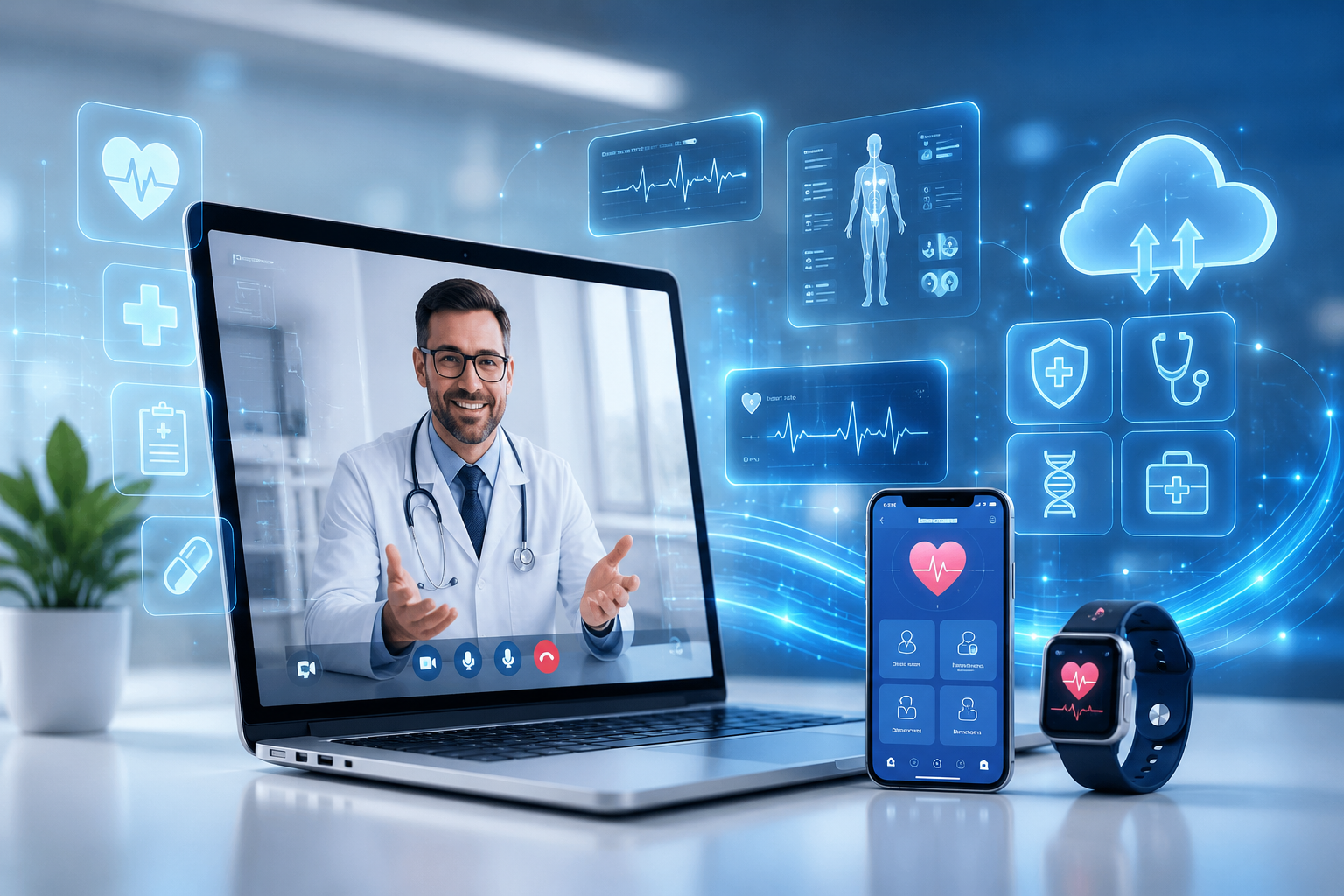
Healthcare organizations are expanding digital care services to improve patient access, strengthen communication, and support more flexible clinical workflows. Hospitals, clinics, specialty practices, and digital health companies increasingly use telemedicine platforms for virtual consultations, appointment management, secure messaging, and selected remote care services. These platforms can connect patients and healthcare professionals while complementing appropriate in-person treatment.
For organizations building long-term virtual care capabilities, Telemedicine Software Development provides a structured approach to creating platforms around clinical, operational, security, and scalability requirements. A purpose-built solution may integrate with Electronic Health Records (EHRs), Electronic Medical Records (EMRs), patient portals, billing systems, and Remote Patient Monitoring (RPM) workflows. When supported by appropriate architecture and governance, telemedicine technology can become a reliable component of modern healthcare delivery.
Why Secure Telemedicine Platforms Matter in Modern Healthcare
Telemedicine systems process sensitive information that may include patient identity data, medical histories, consultation details, prescriptions, and diagnostic information. This makes security a fundamental requirement rather than an optional technical feature. Healthcare organizations need platforms designed to protect information during collection, transmission, storage, and authorized access.
A secure telemedicine environment may include encryption, identity verification, role-based access control, audit logging, API protection, and continuous monitoring. The exact controls depend on the platform architecture, jurisdiction, risk profile, and types of information processed. Security planning should begin during product discovery and continue throughout development, deployment, and maintenance.
Protecting Sensitive Patient Health Information
Patient health information should only be accessible to users with legitimate permissions and clearly defined responsibilities. Physicians, nurses, administrators, patients, and technical personnel may require different levels of system access. Role-Based Access Control (RBAC) can help healthcare organizations manage these distinctions more systematically.
Strong authentication and secure session management can further reduce unauthorized access risks. Depending on organizational requirements, Multi-Factor Authentication (MFA), encryption, audit trails, and monitoring may form part of the security strategy. These controls should be reviewed regularly because cybersecurity threats and software vulnerabilities continue to evolve.
Building Scalable Telemedicine Systems for Growing Patient Demand
Healthcare organizations may launch virtual care services for a limited department and later expand them across specialties, facilities, or geographic regions. A scalable Telemedicine Software Development platform should be able to support increasing numbers of users, consultations, integrations, and data workflows without requiring frequent reconstruction of the core system.
Scalability depends on more than adding server capacity. Database performance, application architecture, API management, infrastructure monitoring, availability planning, and workload distribution all influence system behavior. Healthcare businesses should consider expected growth during early technical planning to reduce avoidable performance limitations later.
Using Cloud Infrastructure for Flexible Healthcare Delivery
Cloud infrastructure can provide flexible computing resources for telemedicine applications when configured and governed appropriately. Healthcare organizations may use cloud environments to support application hosting, data processing, backups, monitoring, and geographic expansion. The architecture should reflect workload patterns, security responsibilities, and applicable data requirements.
A carefully designed cloud strategy may help platforms respond to changing demand, such as increased appointment volumes or expansion into new service areas. However, cloud adoption does not automatically guarantee security or compliance. Identity management, encryption, configuration controls, vendor assessment, and ongoing monitoring remain essential.
Integrating Telemedicine With EHR and EMR Systems
Telemedicine applications can create disconnected information silos when they operate independently from existing healthcare systems. Integration with EHR and EMR platforms may allow authorized professionals to access relevant information and document virtual encounters within established workflows. This can support greater continuity between digital and facility-based care.
Interoperability standards such as HL7 and FHIR are important within healthcare data exchange. The correct integration method depends on vendor capabilities, available APIs, legacy infrastructure, data governance, and regulatory requirements. Healthcare organizations should evaluate these dependencies early because complex integrations can affect cost, timelines, and system reliability.
Creating Connected Clinical and Administrative Workflows
Connected workflows can reduce unnecessary switching between unrelated software systems. When appropriate integrations are available, healthcare professionals may access relevant patient records, manage virtual appointments, document encounters, and coordinate follow-up activities through more consistent processes. This can improve information continuity across selected care channels.
Telemedicine platforms may also connect with laboratory systems, pharmacy workflows, payment services, and patient portals where technically and legally appropriate. Each integration should include clear rules for permissions, data synchronization, error handling, and security. Reliable interoperability is particularly important because incomplete information can create operational and clinical risks.
Supporting Secure Virtual Consultations and Communication
Video consultation remains a central feature of many telemedicine platforms, but healthcare communication requires more than general-purpose video calling. Systems should be designed around patient privacy, professional workflows, identity management, and secure information handling. Consultation features may also connect with scheduling, reminders, digital forms, and follow-up processes.
Healthcare organizations should define how virtual sessions are initiated, authenticated, documented, and completed. The platform should provide a clear experience for both patients and professionals without unnecessary technical barriers. Accessible design is especially important for elderly users, people with disabilities, and individuals with limited digital confidence.
Improving Patient Communication Through Secure Channels
Secure messaging can help patients communicate with healthcare teams according to defined organizational workflows. Patients may receive appointment instructions, approved follow-up information, or notifications through protected channels. This can reduce reliance on fragmented communication tools that may not be appropriate for sensitive health information.
Communication features should include clear expectations around response times and appropriate use. Not every message requires immediate clinical attention, and emergency situations should follow established emergency pathways rather than routine digital messaging. Good platform design helps distinguish between administrative communication and clinically significant interactions.
Enabling Remote Patient Monitoring for Continuous Care
Remote Patient Monitoring allows selected health information to be collected outside traditional clinical facilities. Depending on the program, compatible devices may capture measurements such as blood pressure, blood glucose, heart rate, weight, or oxygen saturation. Authorized healthcare teams can review transmitted information according to defined clinical protocols.
A telemedicine platform can help organize monitoring information alongside consultations and follow-up workflows. This may support programs for chronic conditions or post-treatment monitoring when clinically appropriate. Successful implementation requires attention to device reliability, data quality, patient consent, alert thresholds, and clear professional responsibility.
Managing Chronic Conditions With Connected Digital Tools
Patients managing long-term conditions may require regular monitoring and repeated interactions with healthcare professionals. Digital tools can support structured follow-ups for conditions such as hypertension or diabetes when suitable for the individual patient. Remote measurements may provide additional information between scheduled facility visits.
However, more data does not automatically create better care. Poorly configured alerts can increase workload and contribute to alert fatigue among clinical teams. Healthcare organizations should establish clear review processes so that relevant information reaches appropriate professionals without creating unnecessary operational pressure.
Addressing Healthcare Compliance and Data Privacy Requirements
Healthcare organizations operate within complex legal and regulatory environments. Depending on jurisdiction and data-processing activities, telemedicine platforms may need to consider requirements associated with HIPAA in the United States or the GDPR in the European Union. Other national, regional, and sector-specific obligations may also apply.
Compliance should not be treated as a single software feature or certification label. It involves technology, organizational policies, vendor relationships, workforce practices, contracts, and governance. Healthcare businesses should obtain appropriate legal and regulatory guidance for their specific markets and services.
Building Privacy Into the Software Development Lifecycle
Privacy considerations should begin during product planning rather than after a platform has already been built. Development teams should evaluate what information is collected, why it is needed, where it is stored, how long it is retained, and who can access it. Data minimization can help reduce unnecessary exposure.
Privacy-focused engineering may also involve consent management, access logging, retention controls, and secure deletion processes where required. These capabilities should align with organizational policies and applicable regulations. Clear governance helps healthcare businesses manage patient information more consistently throughout the platform lifecycle.
Designing Telemedicine Platforms for Long-Term Growth
A sustainable telemedicine platform should adapt as healthcare services, patient expectations, and technical requirements evolve. Modular architecture can help organizations introduce new capabilities without redesigning the entire application. Well-structured APIs may also simplify integration with future systems and services.
Long-term planning should consider performance, observability, backup strategies, disaster recovery, software maintenance, and dependency management. Healthcare organizations need to budget for continuous improvement because digital platforms require ongoing updates after launch. Scalability includes both technical capacity and the ability to manage change responsibly.
Preparing for AI, Wearables, and IoMT Technologies
Telemedicine is increasingly connected with Artificial Intelligence, wearable devices, and the Internet of Medical Things (IoMT). AI-enabled systems may assist with administrative automation, documentation, patient routing, or data analysis when implemented responsibly and with suitable human oversight. Wearable technologies may provide additional information for selected monitoring programs.
Future-ready architecture can make emerging technology integration easier, but healthcare organizations should evaluate clinical validity, cybersecurity, privacy, bias, and regulatory requirements. New technology should address defined healthcare needs rather than being added simply because it is available. Responsible adoption is essential in environments where decisions can affect patient outcomes.
Why Custom Telemedicine Development Supports Secure Scalability
Healthcare organizations differ in size, specialty, patient population, technical infrastructure, and compliance responsibilities. A small clinic may require a focused consultation platform, while a hospital network may need multi-location workflows, complex integrations, and enterprise identity management. Generic solutions may not always fit these operational differences.
Custom development allows organizations to design architecture, integrations, user roles, and patient experiences around defined requirements. It can also support multilingual interfaces, accessibility needs, specialty-specific workflows, and future expansion. The development strategy should be based on validated needs, measurable objectives, and realistic technical constraints.
Aligning Platform Architecture With Healthcare Requirements
Successful telemedicine projects require close alignment between technology and actual healthcare workflows. Patients need intuitive interfaces, clinicians need efficient tools, and administrators require appropriate operational visibility. A platform that ignores these differences may create additional work despite having advanced technical features.
Healthcare organizations should involve relevant stakeholders during discovery, design, development, testing, and deployment. Architecture decisions should reflect expected user volumes, integration requirements, security risks, and future growth plans. This approach can help create platforms that remain practical as healthcare services evolve.
Conclusion
Secure and scalable telemedicine software can help healthcare organizations expand virtual care, connect digital workflows, support remote monitoring, and manage growing patient demand. Hospitals, clinics, and digital health companies can use these platforms to complement appropriate in-person services while creating additional channels for patient engagement.
Effective implementation requires more than video communication. Healthcare organizations should consider cybersecurity, EHR and EMR integration, interoperability, cloud architecture, usability, privacy, and regulatory obligations from the beginning. With thoughtful planning and continuous management, telemedicine platforms can support reliable digital patient care while adapting to future healthcare needs.

 English
 Arabic
 Español
 Português
 Deutsch
 Türkçe
 Dutch
Dutch
 Italiano
 Russian
 Romaian