


How PVC Cable Cleats Improved Cable Management in a Commercial Project
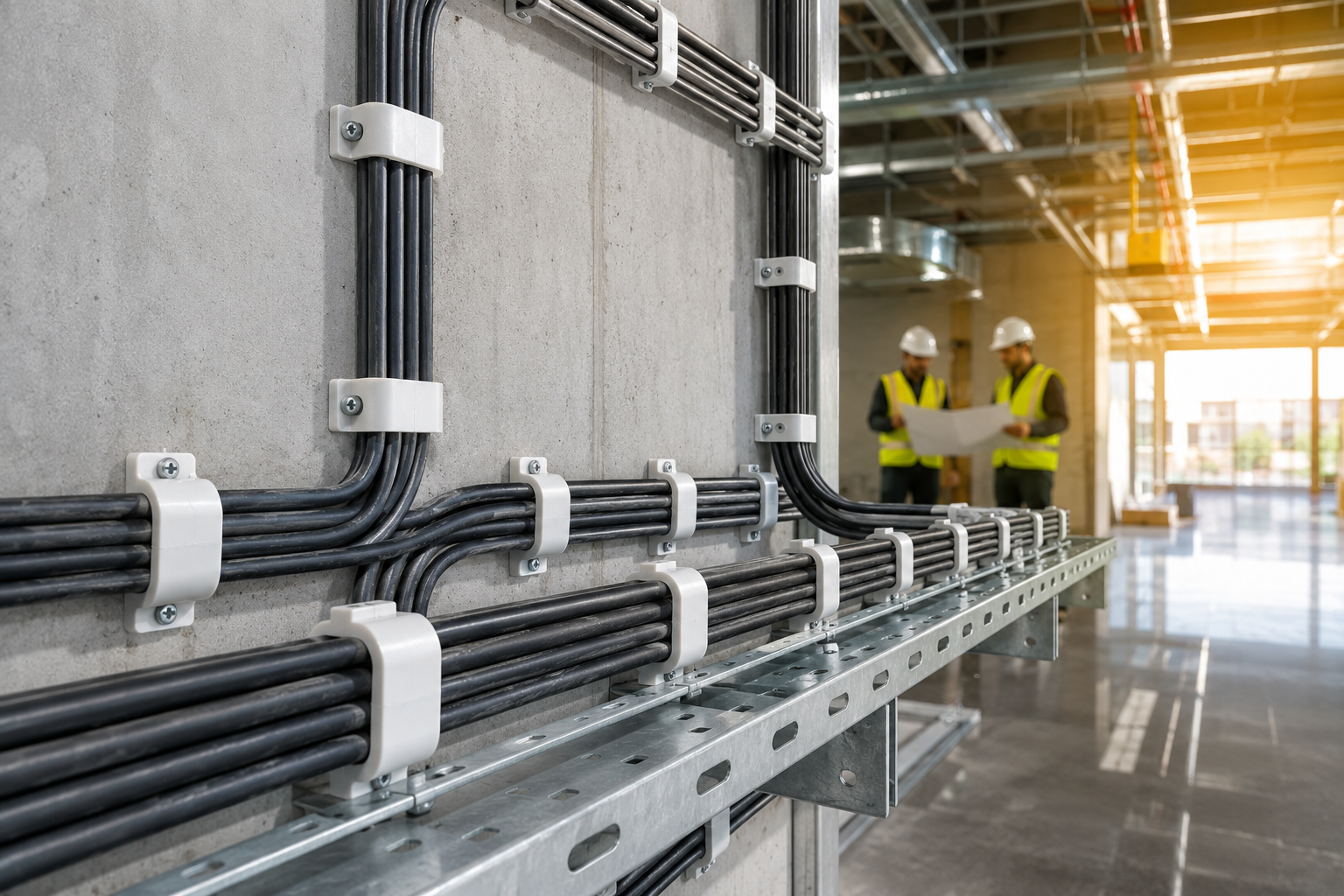
Behind every well-functioning commercial building is an electrical system that has been carefully planned and professionally installed. From office towers and shopping centres to hotels and healthcare facilities, hundreds of cables run through walls, ceilings, risers, and cable trays to power lighting, HVAC systems, security equipment, communication networks, and countless other services.
While cables often remain out of sight, the way they are managed has a direct impact on safety, maintenance, and long-term reliability. One overlooked yet essential component in this process is the cable cleat. In many commercial projects across the UAE, PVC cable cleats have become a practical solution for organising and securing electrical cables while improving installation efficiency.
This article explores how PVC cable cleats transformed cable management in a commercial project and why they continue to be a preferred choice for contractors and electrical engineers.
The Challenge: Managing Hundreds of Electrical Cables
Imagine a newly constructed commercial office building with multiple floors, conference rooms, retail spaces, and service areas. Thousands of metres of electrical cables need to be routed through cable trays, conduits, and distribution systems.
Without proper cable support, cables can shift during installation, sag over time, or become tangled with neighbouring circuits. This not only creates an untidy appearance but also makes inspections, maintenance, and future upgrades far more complicated.
Project engineers needed a cable management solution that was reliable, cost-effective, easy to install, and suitable for indoor commercial environments.
Why PVC Cable Cleats Were Selected
After evaluating different cable support options, the project team chose PVC cable cleats because they offered an excellent balance between durability, affordability, and installation convenience.
Manufactured from high-quality PVC material, these cleats securely hold cables in place without damaging insulation. They are lightweight, corrosion-resistant, and suitable for a wide range of electrical installations commonly found in commercial buildings.
Their simple yet effective design allowed electricians to complete installations efficiently while maintaining consistent cable spacing throughout the project.
Better Cable Organisation
One of the first improvements noticed after installation was the overall organisation of the cable routes.
Instead of loosely arranged wiring, every cable remained securely positioned within the cable trays and support systems. Power, communication, and control cables were neatly separated according to the project's electrical layout.
This organised installation offered several practical advantages:
-
Cleaner cable routing
-
Easier cable identification
-
Reduced cable crossover
-
Improved airflow within cable trays
-
Better accessibility during inspections
A tidy cable installation also reflected the professionalism expected in modern commercial construction.
Faster Installation Saved Valuable Time
Construction schedules often leave little room for delays. Electrical contractors needed a solution that could be installed quickly without compromising quality.
Because PVC cable cleats are lightweight and easy to handle, installation crews were able to secure cables efficiently using standard tools.
The straightforward installation process reduced labour time while allowing electricians to maintain consistent cable spacing throughout the project.
For large commercial developments where thousands of cable supports are required, even small time savings can significantly improve overall project efficiency.
Enhanced Cable Protection
Electrical cables are valuable assets that must remain protected throughout their service life.
PVC cable cleats prevented unnecessary cable movement caused by vibration, maintenance activities, or accidental contact during future building modifications.
By holding cables firmly in place, the cleats reduced mechanical stress on insulation and minimised the likelihood of cable damage over time.
This additional protection contributes to longer cable life and lower maintenance costs.
Simplified Future Maintenance
Commercial buildings continue evolving long after construction is complete. Office layouts change, additional electrical equipment is installed, and communication networks are upgraded.
Neatly secured cables make these future modifications much easier.
Maintenance teams can quickly identify individual cable routes, perform inspections, and replace or install new circuits without disturbing neighbouring cables.
The organised cable management system created by PVC cable cleats saves time during maintenance while reducing the risk of accidental cable damage.
Corrosion Resistance for Long-Term Reliability
Unlike metal cable supports that may require additional protection in certain environments, PVC cable cleats naturally resist corrosion.
This makes them particularly suitable for indoor commercial environments where long-term durability is essential.
Their resistance to moisture and common environmental conditions also helps maintain their appearance and structural integrity throughout the building's operational life.
A Cost-Effective Cable Management Solution
Budget control remains an important consideration in every commercial construction project.
PVC cable cleats offered an economical solution without sacrificing performance. Their affordability, combined with quick installation and low maintenance requirements, delivered excellent long-term value for the project.
Lower installation costs, reduced labour hours, and dependable cable support helped maximise the overall return on investment.
Supporting Safe Electrical Installations
Well-managed cables contribute to safer buildings.
Properly secured cables reduce unnecessary movement, minimise clutter within cable trays, and make routine inspections easier for maintenance teams.
Although cable cleats are only one part of a complete electrical installation, they play an important role in supporting organised, reliable, and professional cable management practices.
For commercial buildings that prioritise safety, these small components deliver significant long-term benefits.
Conclusion
Successful commercial projects rely on careful attention to every detail, including cable management. Although they may appear to be simple accessories, PVC cable cleats make a significant contribution to organised electrical installations by improving cable protection, simplifying maintenance, reducing installation time, and supporting long-term reliability.
For contractors, consultants, and facility managers across the UAE, choosing high-quality PVC cable cleats is a practical investment that enhances both the performance and appearance of electrical systems. Small components often have the greatest impact, and effective cable management is a perfect example of how thoughtful planning leads to safer, more efficient, and longer-lasting commercial installations.
Frequently Asked Questions
What are PVC cable cleats used for?
PVC cable cleats are used to secure and organise electrical cables, preventing unnecessary movement while maintaining neat and accessible cable installations.
Where are PVC cable cleats commonly installed?
They are widely used in commercial buildings, offices, shopping centres, hospitals, hotels, educational facilities, industrial plants, and electrical infrastructure projects.
Why are PVC cable cleats popular for commercial projects?
They are lightweight, corrosion-resistant, easy to install, cost-effective, and provide reliable cable support for long-term electrical installations.

 English
 Français
 Español
 Português
 Deutsch
 Türkçe
 Dutch
Dutch
 Italiano
 Russian
 Romaian