


How to Build an AI Management System Using ISO 42001
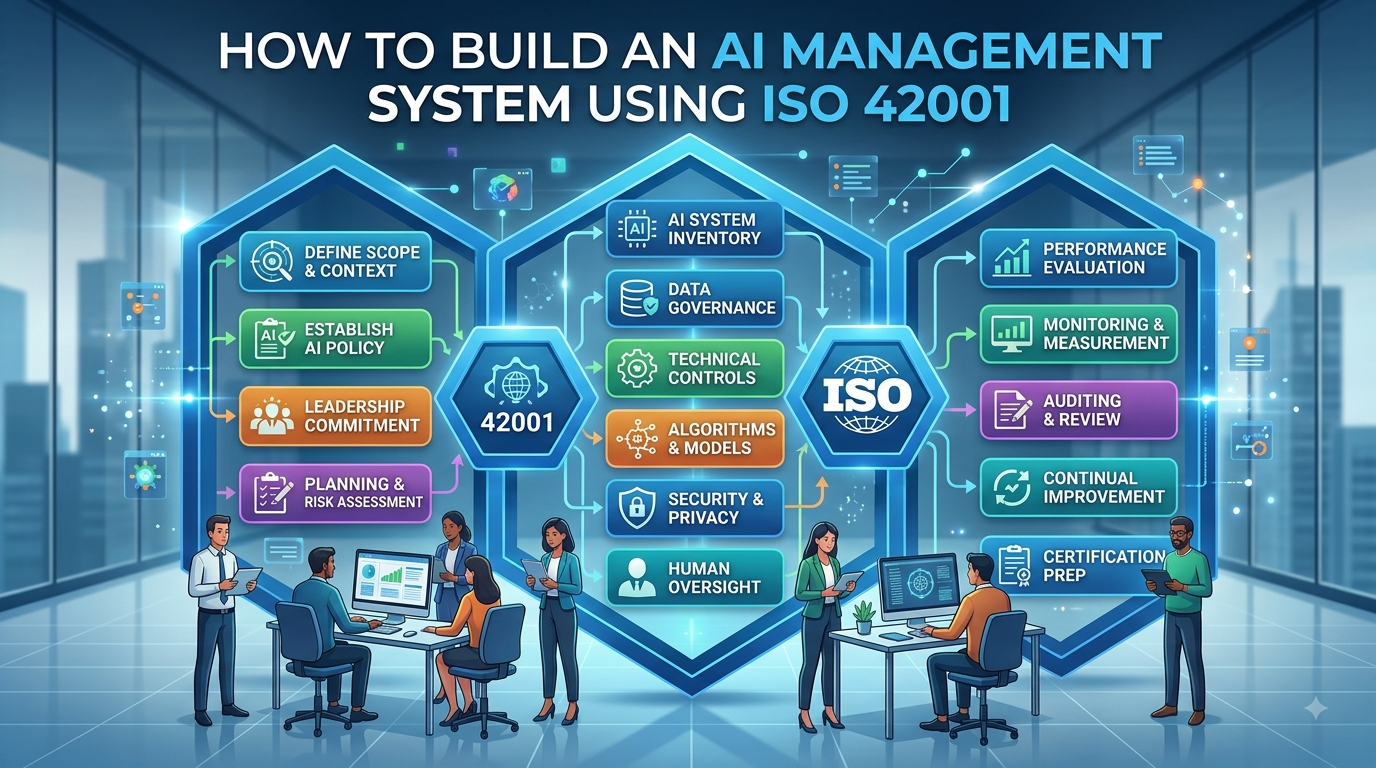
Artificial intelligence is becoming an important part of modern businesses, but managing AI systems responsibly requires a structured approach. An AI Management System (AIMS) helps organizations manage risks, improve governance, and ensure that AI is developed and used responsibly. ISO/IEC 42001 provides an internationally recognized framework for establishing, implementing, maintaining, and continually improving an AI Management System.
What Is an AI Management System?
An AI Management System is a structured set of policies, processes, controls, and responsibilities that help an organization manage its AI-related activities. It addresses areas such as AI risks, data management, transparency, accountability, security, and continual improvement.
ISO 42001 follows a management-system approach, making it easier for organizations to integrate AI governance into their existing business processes.
Steps to Build an AI Management System Using ISO 42001
1. Understand Your AI Environment
Start by identifying how your organization uses AI. List AI systems, applications, vendors, datasets, and business processes involving AI. Understanding the organization's internal and external context helps define the scope of the AIMS.
2. Establish AI Governance
Define clear roles and responsibilities for AI management. Establish policies that explain how AI should be developed, purchased, deployed, monitored, and retired. Management commitment is essential for creating an effective governance structure.
3. Identify and Assess AI Risks
AI systems can create risks related to bias, privacy, security, inaccurate outputs, transparency, and reliability. Conduct an AI risk assessment to identify potential impacts and determine appropriate controls for reducing those risks.
4. Implement Appropriate Controls
Based on the identified risks, implement relevant controls and processes. These may include data governance, human oversight, AI system monitoring, documentation, transparency measures, and incident management.
5. Monitor AI Performance
An AIMS should not stop after implementation. Regularly monitor AI systems to evaluate their performance, reliability, risks, and compliance with organizational requirements. Document incidents and take corrective actions when necessary.
6. Continually Improve the AIMS
Conduct internal audits and management reviews to assess the effectiveness of the AI Management System. Use audit findings, performance results, incidents, and stakeholder feedback to continually improve the system.
Why ISO 42001 Certification Matters
Organizations can demonstrate their commitment to responsible AI governance by implementing an AIMS based on ISO 42001 and pursuing ISO 42001 Certification. Certification can help build stakeholder confidence, strengthen AI risk management, and demonstrate a systematic approach to responsible AI practices.
Professionals looking to understand the standard can consider an ISO 42001 Course to learn about its requirements, implementation, risk management, and auditing principles. ISO 42001 Training can also help AI, compliance, IT, security, and management professionals develop practical skills for implementing an effective AI Management System.
Conclusion
Building an AI Management System using ISO 42001 provides organizations with a structured way to govern AI throughout its lifecycle. By understanding AI activities, establishing governance, managing risks, implementing controls, monitoring performance, and continually improving processes, organizations can create a more responsible and reliable AI environment.

 English
 Arabic
 Français
 Español
 Português
 Deutsch
 Türkçe
 Dutch
Dutch
 Italiano
 Romaian