


Polymers for Additive Manufacturing: Enabling Next-Generation 3D Printing
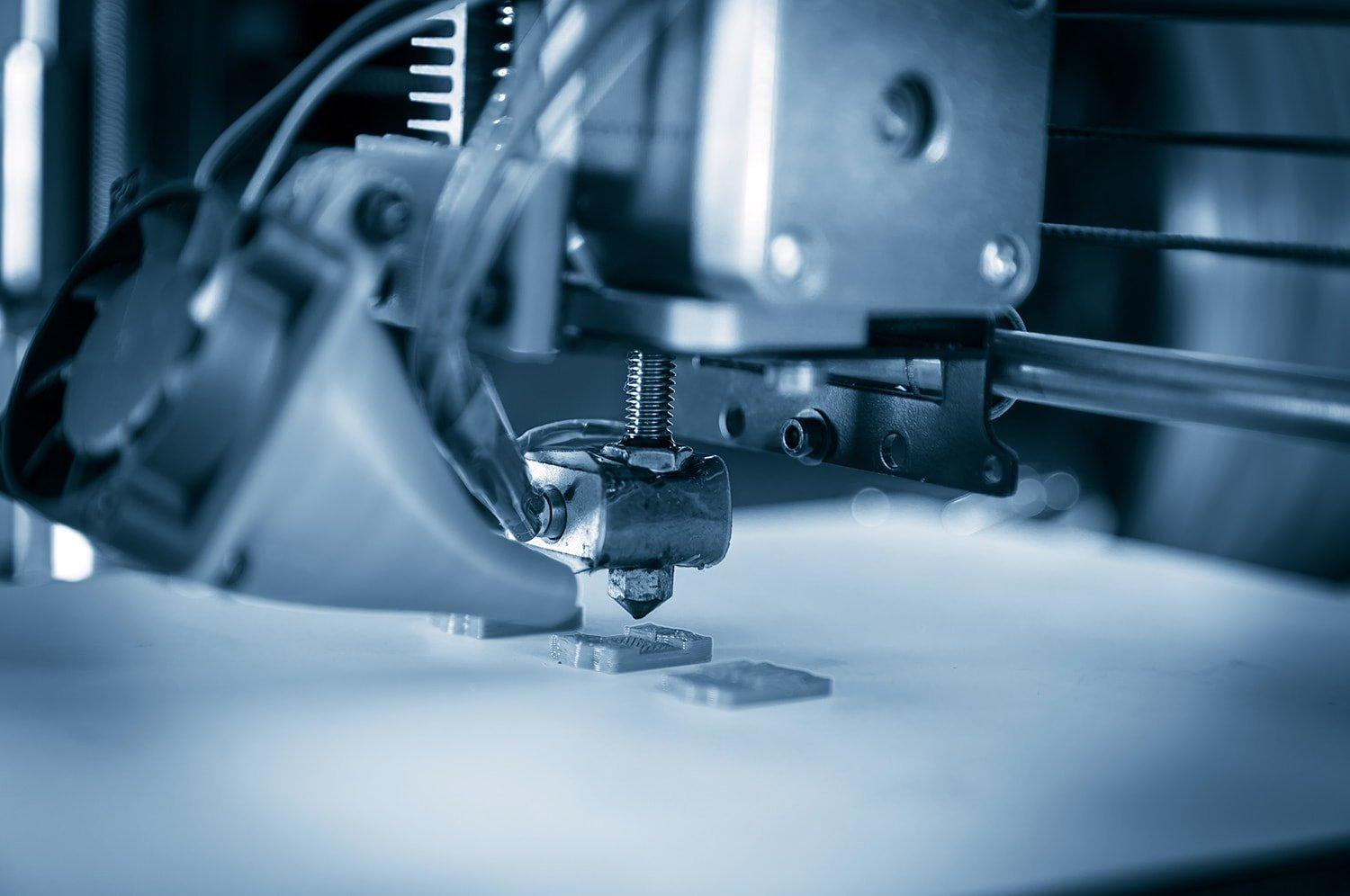
Additive manufacturing (AM), commonly known as 3D printing, has revolutionized how products are designed and produced. By building parts layer-by-layer instead of traditional subtractive manufacturing techniques, AM opens up new possibilities for geometries, personalization, and on-demand manufacturing. While metals have long been a popular material choice for 3D printing, polymers are increasingly becoming viable materials that can compete across industries.
Polymers Gain Popularity
Early 3D printing systems focused primarily on extruding plastic filaments like acrylonitrile butadiene styrene (ABS) and polylactic acid (PLA). These thermoplastics offered an accessible way for consumers and small businesses to start 3D printing. As the technology advanced, other techniques such as polyjet, stereolithography, and binder jetting enabled the use of more sophisticated engineering-grade polymers. Today, a wide range of polymers covering several material classes can be 3D printed, including thermoplastics, elastomers, and thermosets.
From Prototyping to Production
While still commonly used for prototypes and concept models, polymers are increasingly making the transition from prototyping to final production parts. For applications in Polymers for Additive Manufacturing requiring flexible, lightweight components, polymers offer advantages over steel and aluminum. Some automotive OEMs have introduced 3D printed polymer parts in vehicle interiors due to their design freedom and fatigue resistance. Hearing aid and medical device companies leverage 3D printing to produce customized polymer casing parts tailored for each patient. As polymer materials continue to improve through the development of new formulations, their use cases are sure to diversify into more demanding environments over time.
Benefits of 3D Printing with Polymers
Design Complexity: Thanks to the layer-by-layer additive nature, polymers processed via techniques like stereolithography, multi-jet fusion, and polyjet offer unparalleled design complexity with moving parts, lattice structures, and organic contours impossible to achieve through traditional manufacturing methods. Parts can be hollowed out, have internal channels added, and mimic sophisticated natural designs.
Mass Customization: polymer 3D printing is well-suited for low-volume, customized manufacturing. Parts can be easily personalized on-demand without expensive tooling changes. Applications include customized prosthetics and implants designed for individual anatomies. Production runs of one are as cost-effective as higher volumes.
Material Optimization: design software allows complex analyses to be performed on 3D models to optimize material layout and improve strength/stiffness ratios. Internal architectures like cellular infill periodically add only the necessary materials. This saves costs on raw polymer materials and results in lightweight yet durable parts.
On-Demand Manufacturing: polymer 3D printing provides more flexible just-in-time production to better respond to evolving designs, meet urgent product requests, and reduce risks from excess inventory. Parts can be produced directly at the point of use for immediate testing and assembly into higher level systems. This condensed supply chain allows businesses to be more agile and competitive.
Engineering Thermoplastics Expand Applications
While commodity plastics like ABS and PLA remain very popular due to their low cost and accessibility, several engineering-grade thermoplastics are making 3D printing more viable for high-performance applications. Materials like polyetherimide (PEI), polyetheretherketone (PEEK), and polyetherketoneketone (PEKK) offer enhanced thermal, chemical, and mechanical properties compared to general purpose plastics.
PEEK in particular has seen growing adoption in industries like aerospace and medical due to its high strength, stiffness, and resistance to chemicals and heat. 3D printed PEEK parts have been safely implanted inside the human body and deployed in environments from jet engines to electrical subsea connectors. As more engineering thermoplastics are qualified for 3D printing processes like multi-jet fusion, the range of direct manufacture applications will continue expanding into markets with more stringent material requirements.
Thermosets Break New Ground
While long relegated to prototyping due to their irreversible polymerization, 3D printable thermoset resins are changing perspectives. Materials like polyurethane, epoxy, and silicones can match or exceed performance of metals in many applications. New mask-projected 3D printing techniques based on digital light processing (DLP) cure thermoset parts layer-by-layer as accurately as stereolithography.
Emerging applications have included structural parts for wind turbines, boats, and construction equipment. Dental aligners are rapidly transitioning from thermoformed plastics to 3D printed clear aligner resins. As production scales increase, thermoset composites reinforced with carbon fiber or Kevlar can 3D print structural parts challenging those made from metal alloys in industries from aerospace to automotive. Their corrosion resistance, tunable stiffness, and dimensional stability at high temperatures position thermosets to displace more metal components than ever before.
With continuous improvements in polymers and additive manufacturing technologies, the design freedom and application scope of 3D printed polymer parts will only continue growing. New material launches, post-processing techniques, and multi-material systems are helping polymers gain ground even in spheres traditionally dominated by engineering thermoplastics and metals. Leveraging advantages from digital design tools to net shape production, polymers are cementing their role as a lead contender for next-generation 3D manufacturing across industries.
Get More Insights On This Topic: Polymers for Additive Manufacturing
Explore More Article: Bulk SMS Marketing Services

 English
 Français
 Español
 Português
 Deutsch
 Türkçe
 Dutch
Dutch
 Italiano
 Russian
 Romaian