


Full-Stack Development Best Practices: Building Robust Applications

Following full-stack development best practices is necessary to create scalable and reliable online apps. The main best practices that full-stack developers should adhere to guarantee the success of their projects are examined in this article.
Developing web applications from the front end to the back end is known as full-stack development. Developers must adhere to best practices that guarantee code quality, maintainability, and performance to create scalable and reliable applications. This article provides guidance for developers to produce high-quality applications by outlining crucial best practices in full-stack development.
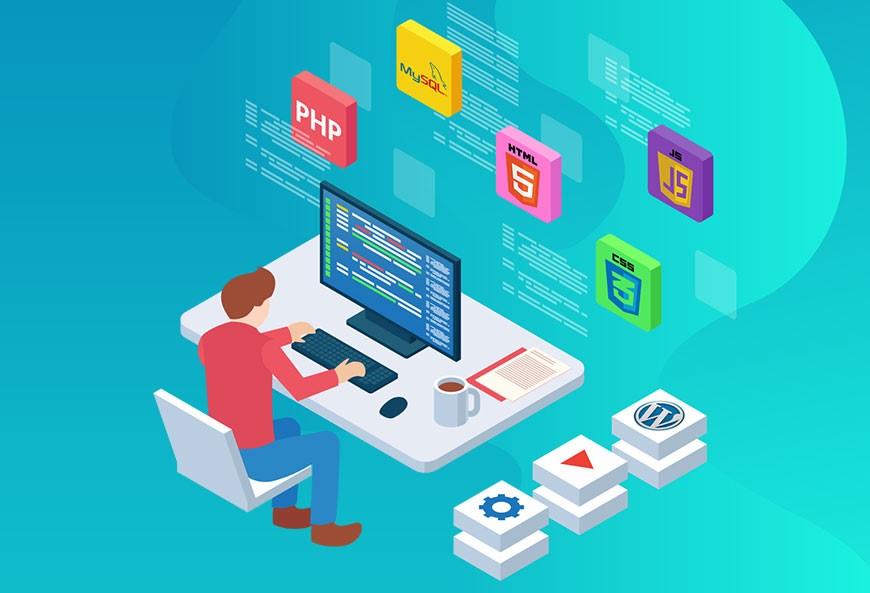
1. Code Organization and Modularization
Organizing code into modules improves maintainability and readability. Full-stack developers should break down their code into smaller, reusable components and services, following the principles of modularization and separation of concerns.
2. Consistent Coding Standards
Maintaining consistent coding standards across the project is crucial. Using linters and formatters, such as ESLint and Prettier, helps enforce coding conventions and ensures that the codebase remains clean and consistent.
3. Efficient Database Design
A well-designed database schema is the backbone of any application. Full-stack developers should focus on normalizing data, indexing frequently queried fields, and optimizing query performance to ensure efficient data management.
4. RESTful API Design
Designing RESTful APIs with clear and consistent endpoints is essential for back-end development. APIs should follow standard conventions, use appropriate HTTP methods, and return meaningful error messages to facilitate smooth communication between the front end and back end.
5. Testing and Test Automation
Writing tests are critical to ensuring application reliability. Full-stack developers should implement unit tests, integration tests, and end-to-end tests using frameworks like Jest, Mocha, or Cypress. Automated testing helps catch bugs early and maintain code quality.
6. Security Best Practices
Implementing security best practices protects applications from vulnerabilities. Full-stack developers should use HTTPS, validate user inputs, sanitize data, and employ authentication and authorization mechanisms to safeguard their applications.
Conclusion:
For web applications to be reliable and scalable, full-stack developers must follow best practices. Developers may guarantee the effectiveness and sustainability of their work by concentrating on code organization, uniform coding standards, effective database architecture, RESTful API design, testing, and security. of their projects. Continuous learning and staying updated with industry trends will further enhance their skills and capabilities.

 English
 Arabic
 Français
 Español
 Português
 Deutsch
 Türkçe
 Dutch
Dutch
 Italiano
 Romaian