


How To Calculate Cable Size: A Comprehensive Guide
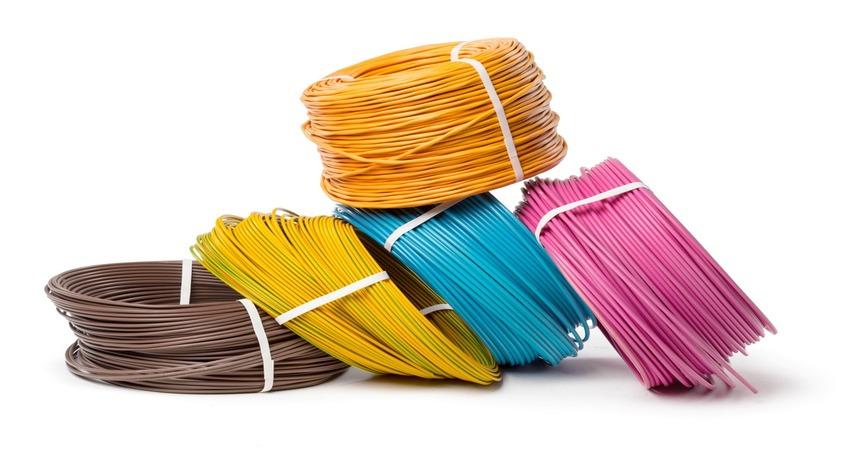
Selecting the appropriate cable size for electrical wiring in residential, commercial, or industrial installations is one of the initial steps towards guaranteeing safety and efficiency. If the cable size is either too small or too big, leading to overheating, equipment failure, or starting a fire. In this article, we will look at how to compute the right Australian Cable size for various electrical applications.
Thus, it is imperative that you'd learn the core concepts regarding cable sizing by Australian cable manufacturers to guarantee that you'll have a sustainable, energy-efficient and safe electrical system. The important factors affecting cable sizing and how to calculate them accurately.
What is important with cable sizing?
Cable sizing is the process of finding out the proper thickness (cross-sectional area) of the cables needed to safely transfer electrical current over a specified length. The factors that affect cable sizing are as follows:
● Ampacity: The amount of current (in amperes) a cable can carry before it gets too hot.
● Voltage Drop: The voltage loss that happens when electricity passes down a cable over a distance. High Voltage Drop Impacts on Performance
● Ambient Temperature: The temperature of the room or environment around the surrounding cable.
● Load Type: Depending on whether the load is continuous or intermittent, a resistive load (such as heating) or an inductive load (such as motors) influences the design of the cable.
Now we deep-dive into these factors when calculating cable size.
How to Calculate Cable Size: A Step-by-Step Guide
Establish Existing Load(s) (Ampacity)
The initial step to determine the correct-sized cable is to understand your load—that is, how much current your cable will have to carry. Usually this is somehow related to overall connected equipment or appliances power (watts or kilowatts).
Formula:
The relationship can be expressed using the following equation: Current (I) = Power (P) / Voltage (V)
Where:
P is the power measurement (W or kW).
V is voltage (volt, either 230V or 400V, for most residential/commercial setups).
For instance, say you have a 2 kW appliance using a 230V supply: The current, I, is calculated as:
The current drawn from the grid is given as I=2000W230V=8.7AI = \frac{2000 \, \text{W}}{230 \, \text{V}} = 8.7 \, \text{A}I=230V2000W=8.7A
That means the cable has to be able to handle 8.7 amps safely.
Calculate the Voltage Drop
Differentials in voltage can occur as electricity flows along a cable. With distance, cables have resistance and volt drop occurs. To avoid the performance degradation of equipment, the drop in voltage should be restricted to some percentage—typically three to five percent of the circuit voltage for many residential and business circuits.
Consider Cable Material (Copper vs. Aluminum)
The type of cable plays a major role in the amount of current that can be supported. In contrast, copper cables are more heat-resistant and have lower resistivity, which makes them pass a similar load current with a smaller cross-sectional area than the aluminium cables.
For example:
A copper cable 2.5 mm² could typically carry 20-25 amps of current.
A 2.5 mm² aluminium cable would normally be rated for about 15-20 amps.
Thus, the type of material used for the cable must also be considered when calculating the size, as it will determine the wire size required to safely carry the current.
Consider Ambient Temperature
How efficiently a cable dissipates heat is greatly determined by the temperature of ambient air around the cable. At higher temperatures, the capacity of the cable to carry current is reduced. Temperature correction factors are provided in datasheets from the majority of cable manufacturers.
However, if the temperature exceeds some assignable value (30 °C in most areas), the cable cannot carry that much current anymore. You need to increase the size of the cable accordingly by a correction factor for the temperature.
For a 2.5 mm² ordinary copper cable, e.g., that will mean a reduction of about 10% of the ampacity at an ambient temperature of 40 °C.
Factor in the Type of Load
Also important is the nature of the load that the cable is supporting. Resistive loads (heaters, incandescent light bulbs, etc.) are continuous, while inductive loads (motors, air conditioners, etc.) generally necessitate larger cable sizes due to inrush currents. The cable for inductive loads must be able to withstand the running current as well as the initial surge current when starting.
Such inrush currents can be large for inductive loads, and it is a good practice to increase the cable by up to 25% to accommodate these inrush currents. It protects from startup overheating and efficiently operates the system.
National Standards and Regulations
All over the world, there are wiring codes that guide the relevant wiring practice, which helps in determining the appropriate cable size for the types of load and the length of cable, etc. These standards are typically included internally in documents as NEC (National Electrical Code) in North America, BS 7671 in the UK, or IEC 60364 internationally.
These standards provide tables for the minimum acceptable size of cables for different types of installations and load requirements, given different safety factors. One such data-driven approach is the IEC 60287 standard, which provides a formula for calculating the ampacity of cables based on construction and environmental conditions.
This references these standards to make sure you are growing—not just that you are following the local regulations, but that you are designing a system that is safe and effective.
Conclusion
The right cable size calculation is crucial in order to ensure the proper functioning and safety of electrical installations. Through assessment of load, voltage drop, cable material, ambient temperature and load type, you will arrive at the suitable cable meeting your requirements.
Always refer to national electrical standards and, in uncertain circumstances, consult a professional to ensure your electrical setups are safe, compliant, and reliable. Choosing the right cable size not only optimizes your electrical system’s load but also minimizes the risk of electrocution in your home or business.
Also Read: Ways to Look For Mining Cable Manufacturer and Suppliers in Australia

 English
 Arabic
 Français
 Español
 Português
 Deutsch
 Türkçe
 Italiano
 Russian
 Romaian