


Understanding Transformers: Power Transformers, Distribution Transformers, and Their Role in Electrical Systems
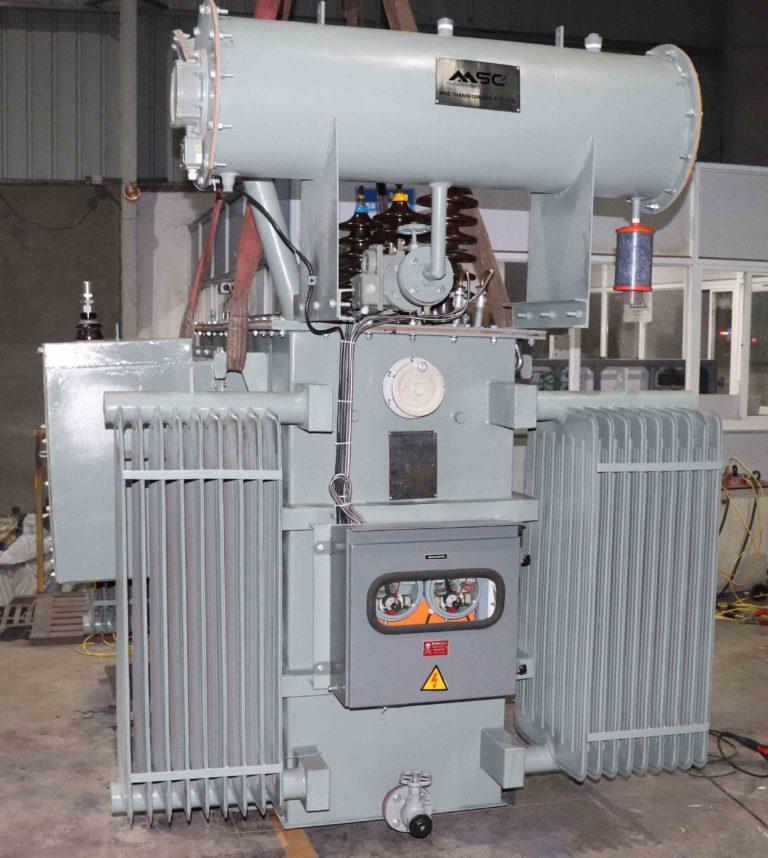
Introduction
Transformers are critical components of electrical systems, enabling efficient power transmission and distribution. They help step up or down voltage levels to ensure electricity's safe and effective delivery. Among the various types, Power Transformers and Distribution Transformers serve distinct purposes in the power supply chain. This article explores the fundamental principles of transformers, the differences between power and distribution transformers, and their respective applications.
What is a Transformer?
A Transformer is an electrical device that transfers electrical energy between two or more circuits through electromagnetic induction. It consists of primary and secondary windings wound around a magnetic core. Depending on the requirement, transformers either increase (step-up) or decrease (step-down) voltage levels to ensure efficient power transmission.
Basic Components of a Transformer
-
Core – Made of laminated iron or silicon steel, it provides a path for magnetic flux.
-
Windings – Copper or aluminum coils that conduct electricity.
-
Insulation – Prevents short circuits between windings.
-
Cooling System – Includes oil, air, or water-based cooling methods.
-
Tap Changer – Adjusts voltage levels for a stable power supply.
Power Transformers
Power transformers are designed for high-voltage applications and are primarily used in power generation and transmission systems. They operate at high efficiency and handle bulk power transfer over long distances.
Key Features of Power Transformers
-
High Voltage Capacity: Typically operates at voltages above 33 kV.
-
Large Size: Can handle high power levels, often above 200 MVA.
-
Continuous Operation: Works 24/7 in substations.
-
Efficient Cooling Systems: Uses oil-based cooling for optimal performance.
-
Step-Up and Step-Down Functionality: Used in power plants to step up voltage for transmission and in substations to step down voltage for distribution.
Applications of Power Transformers
-
Electrical power generation stations.
-
High-voltage transmission networks.
-
Industrial plants requiring bulk power supply.
Distribution Transformers
Distribution Transformers are used to step down voltage to levels suitable for consumer usage. These transformers are found in residential areas, commercial buildings, and small industrial setups.
Key Features of Distribution Transformers
-
Lower Voltage Ratings: Typically operates at voltages below 33 kV.
-
Smaller Size: More compact compared to power transformers.
-
Limited Load Capacity: Usually rated below 200 MVA.
-
Designed for Short-Distance Distribution: Supplies electricity to homes and businesses.
-
Variety of Types: Pole-mounted, pad-mounted, and underground distribution transformers.
Applications of Distribution Transformers
-
Residential power distribution.
-
Commercial buildings and office complexes.
-
Rural and urban power networks.
Key Differences Between Power and Distribution Transformers
|
Feature |
Power Transformer |
Distribution Transformer |
|
Voltage Range |
Above 33 kV |
Below 33 kV |
|
Load Capacity |
High (Above 200 MVA) |
Low (Below 200 MVA) |
|
Cooling System |
Oil-based (ONAN, ONAF) |
Air-cooled or oil-cooled |
|
Efficiency |
High |
Moderate |
|
Application |
Power generation and transmission |
Residential and commercial distribution |
Conclusion
Transformers play a crucial role in modern electrical networks, ensuring that electricity is transmitted and distributed efficiently. Power transformers are essential for high-voltage transmission over long distances, while Distribution transformers provide electricity at usable voltage levels for everyday applications. Understanding their differences helps in selecting the right transformer for specific electrical needs, ensuring efficiency, reliability, and safety in power systems.
By leveraging advanced transformer technology, utilities, and industries can enhance power management and minimize energy losses, contributing to a more stable and sustainable energy infrastructure.

 Arabic
 Français
 Español
 Português
 Deutsch
 Türkçe
 Dutch
Dutch
 Italiano
 Russian
 Romaian