


Global Device‑as‑a‑Service Market Forecast 2025–2032
Market Estimation & Definition
The global Device‑as‑a‑Service (DaaS) market refers to the delivery model in which hardware devices such as laptops, desktops, tablets, smartphones, and peripheral equipment are provided to businesses through a subscription‑based service rather than through outright purchase. In this model, device procurement is bundled with support services such as deployment, lifecycle management, maintenance, security, and end‑of‑life recycling or refresh. This shift enables organizations to transform traditional IT capex into predictable opex, streamline asset management, and stay technologically current without owning hardware assets.
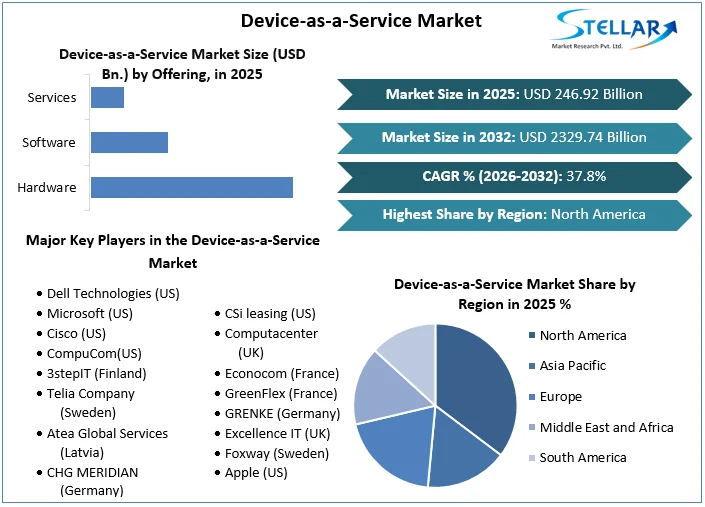
According to Stellar Market Research estimates, the global DaaS market was valued at USD 25.30 billion in 2024 and is projected to reach USD 80.72 billion by 2032, expanding at a robust compound annual growth rate (CAGR) of 15.0% from 2025 to 2032. This strong growth is driven by accelerating digital transformation across industries, expanding remote work trends, and the increasing need for flexible, manageable, and secure device ecosystems.
Device‑as‑a‑Service shifts the paradigm from traditional one‑time hardware purchases to continuous services, allowing enterprises to access the latest technology at controlled costs while outsourcing logistics, support, and lifecycle maintenance to specialized providers. As organizations aim to optimize IT spend, reduce downtime, and enhance user productivity, DaaS has emerged as a compelling alternative to conventional IT procurement.
Request Free Sample Report: https://www.stellarmr.com/report/req_sample/Device-as-a-Service-Market/448
Market Growth Drivers & Opportunity
The DaaS market is being propelled by multiple strategic and market forces:
• Rapid Adoption of Remote and Hybrid Work Models
Post‑pandemic workplace transformation has permanently altered how companies operate. With remote and hybrid work becoming standard in many industries, organizations are seeking scalable and managed device solutions that can be provisioned, secured, and supported across distributed workforces. DaaS simplifies remote deployment, updates, and support without physical presence.
• Cost Optimization & Predictable IT Budgets
DaaS enables businesses to convert upfront capital expenditures on devices into predictable monthly operational expenses. For many organizations — especially small and medium‑sized enterprises (SMEs) — this model reduces financial strain, improves cash flow management, and aligns device costs with real usage and needs.
• Increased Focus on Security & Risk Management
Modern cybersecurity threats demand robust endpoint security and continuous device monitoring. DaaS providers often bundle advanced security services, firmware updates, patch management, and compliance enforcement, helping businesses mitigate risks and maintain regulatory standards more effectively.
• Shortened IT Refresh Cycles
Hardware lifecycles are shortening as device performance demands increase. With DaaS, organizations can more easily refresh technology on a scheduled basis, ensuring up‑to‑date equipment without the logistical complexity of asset disposal or reinvestment.
The market opportunity is significant not only for corporate IT teams but also for channel partners, managed service providers (MSPs), and hardware vendors pivoting toward service‑oriented revenue streams. DaaS helps transform traditional IT supply chains into agile, demand‑driven models capable of rapid scaling and optimization.
What Lies Ahead: Emerging Trends Shaping the Future
Several emerging trends are expected to shape the evolution of the Device‑as‑a‑Service market:
• Integration with Software‑as‑a‑Service (SaaS) and Security Services
DaaS is increasingly being combined with SaaS and endpoint security services to deliver cohesive IT offerings. This bundled approach provides seamless management of software licenses, device performance, and data protection within a unified subscription.
• Expansion of IoT and Specialized Devices
Beyond traditional desktops and laptops, DaaS is expanding into Internet of Things (IoT) devices, scanners, mobile point‑of‑**** systems, and industrial‑grade hardware. Industries such as healthcare, logistics, retail, and manufacturing are exploring DaaS models for digitally connected equipment.
• Enhanced Predictive Analytics and AI‑Driven Support
Advanced analytics, machine learning, and AI‑powered support systems are improving device performance monitoring, predictive maintenance, and automated troubleshooting. These technologies reduce downtime and extend device lifecycles while maintaining service quality.
• Sustainability and Circular IT Practices
Environmental concerns are driving demand for responsible device lifecycle practices. DaaS providers emphasize efficient refurbishment, recycling, and reuse of hardware components, helping organizations meet sustainability goals while reducing electronic waste.
Request Free Sample Report: https://www.stellarmr.com/report/req_sample/Device-as-a-Service-Market/448
About Stellar Market Research
Stellar Market Research is a global leader in market research and consulting services, specializing in a wide range of industries including travel and tourism, technology, agriculture, healthcare, and consumer products. With expert analysts and data-driven insights, Stellar Market Research helps businesses assess competitive environments, uncover growth opportunities, and make strategic decisions that drive success.
For More Information, Please Contact:
Stellar Market Research
S.no.8, H.no. 4-8 Pl.7/4, Kothrud,
Pinnac Memories Fl. No. 3, Kothrud, Pune,
Pune, Maharashtra, 411029
📧 sales@stellarmr.com
📞 +91 20 6630 3320 | +91 9607365656
Market Estimation & Definition
The global Device‑as‑a‑Service (DaaS) market refers to the delivery model in which hardware devices such as laptops, desktops, tablets, smartphones, and peripheral equipment are provided to businesses through a subscription‑based service rather than through outright purchase. In this model, device procurement is bundled with support services such as deployment, lifecycle management, maintenance, security, and end‑of‑life recycling or refresh. This shift enables organizations to transform traditional IT capex into predictable opex, streamline asset management, and stay technologically current without owning hardware assets.
According to Stellar Market Research estimates, the global DaaS market was valued at USD 25.30 billion in 2024 and is projected to reach USD 80.72 billion by 2032, expanding at a robust compound annual growth rate (CAGR) of 15.0% from 2025 to 2032. This strong growth is driven by accelerating digital transformation across industries, expanding remote work trends, and the increasing need for flexible, manageable, and secure device ecosystems.
Device‑as‑a‑Service shifts the paradigm from traditional one‑time hardware purchases to continuous services, allowing enterprises to access the latest technology at controlled costs while outsourcing logistics, support, and lifecycle maintenance to specialized providers. As organizations aim to optimize IT spend, reduce downtime, and enhance user productivity, DaaS has emerged as a compelling alternative to conventional IT procurement.
Request Free Sample Report: https://www.stellarmr.com/report/req_sample/Device-as-a-Service-Market/448
Market Growth Drivers & Opportunity
The DaaS market is being propelled by multiple strategic and market forces:
• Rapid Adoption of Remote and Hybrid Work Models
Post‑pandemic workplace transformation has permanently altered how companies operate. With remote and hybrid work becoming standard in many industries, organizations are seeking scalable and managed device solutions that can be provisioned, secured, and supported across distributed workforces. DaaS simplifies remote deployment, updates, and support without physical presence.
• Cost Optimization & Predictable IT Budgets
DaaS enables businesses to convert upfront capital expenditures on devices into predictable monthly operational expenses. For many organizations — especially small and medium‑sized enterprises (SMEs) — this model reduces financial strain, improves cash flow management, and aligns device costs with real usage and needs.
• Increased Focus on Security & Risk Management
Modern cybersecurity threats demand robust endpoint security and continuous device monitoring. DaaS providers often bundle advanced security services, firmware updates, patch management, and compliance enforcement, helping businesses mitigate risks and maintain regulatory standards more effectively.
• Shortened IT Refresh Cycles
Hardware lifecycles are shortening as device performance demands increase. With DaaS, organizations can more easily refresh technology on a scheduled basis, ensuring up‑to‑date equipment without the logistical complexity of asset disposal or reinvestment.
The market opportunity is significant not only for corporate IT teams but also for channel partners, managed service providers (MSPs), and hardware vendors pivoting toward service‑oriented revenue streams. DaaS helps transform traditional IT supply chains into agile, demand‑driven models capable of rapid scaling and optimization.
What Lies Ahead: Emerging Trends Shaping the Future
Several emerging trends are expected to shape the evolution of the Device‑as‑a‑Service market:
• Integration with Software‑as‑a‑Service (SaaS) and Security Services
DaaS is increasingly being combined with SaaS and endpoint security services to deliver cohesive IT offerings. This bundled approach provides seamless management of software licenses, device performance, and data protection within a unified subscription.
• Expansion of IoT and Specialized Devices
Beyond traditional desktops and laptops, DaaS is expanding into Internet of Things (IoT) devices, scanners, mobile point‑of‑**** systems, and industrial‑grade hardware. Industries such as healthcare, logistics, retail, and manufacturing are exploring DaaS models for digitally connected equipment.
• Enhanced Predictive Analytics and AI‑Driven Support
Advanced analytics, machine learning, and AI‑powered support systems are improving device performance monitoring, predictive maintenance, and automated troubleshooting. These technologies reduce downtime and extend device lifecycles while maintaining service quality.
• Sustainability and Circular IT Practices
Environmental concerns are driving demand for responsible device lifecycle practices. DaaS providers emphasize efficient refurbishment, recycling, and reuse of hardware components, helping organizations meet sustainability goals while reducing electronic waste.
Request Free Sample Report: https://www.stellarmr.com/report/req_sample/Device-as-a-Service-Market/448
About Stellar Market Research
Stellar Market Research is a global leader in market research and consulting services, specializing in a wide range of industries including travel and tourism, technology, agriculture, healthcare, and consumer products. With expert analysts and data-driven insights, Stellar Market Research helps businesses assess competitive environments, uncover growth opportunities, and make strategic decisions that drive success.
For More Information, Please Contact:
Stellar Market Research
S.no.8, H.no. 4-8 Pl.7/4, Kothrud,
Pinnac Memories Fl. No. 3, Kothrud, Pune,
Pune, Maharashtra, 411029
📧 sales@stellarmr.com
📞 +91 20 6630 3320 | +91 9607365656
Global Device‑as‑a‑Service Market Forecast 2025–2032
Market Estimation & Definition
The global Device‑as‑a‑Service (DaaS) market refers to the delivery model in which hardware devices such as laptops, desktops, tablets, smartphones, and peripheral equipment are provided to businesses through a subscription‑based service rather than through outright purchase. In this model, device procurement is bundled with support services such as deployment, lifecycle management, maintenance, security, and end‑of‑life recycling or refresh. This shift enables organizations to transform traditional IT capex into predictable opex, streamline asset management, and stay technologically current without owning hardware assets.
According to Stellar Market Research estimates, the global DaaS market was valued at USD 25.30 billion in 2024 and is projected to reach USD 80.72 billion by 2032, expanding at a robust compound annual growth rate (CAGR) of 15.0% from 2025 to 2032. This strong growth is driven by accelerating digital transformation across industries, expanding remote work trends, and the increasing need for flexible, manageable, and secure device ecosystems.
Device‑as‑a‑Service shifts the paradigm from traditional one‑time hardware purchases to continuous services, allowing enterprises to access the latest technology at controlled costs while outsourcing logistics, support, and lifecycle maintenance to specialized providers. As organizations aim to optimize IT spend, reduce downtime, and enhance user productivity, DaaS has emerged as a compelling alternative to conventional IT procurement.
Request Free Sample Report: https://www.stellarmr.com/report/req_sample/Device-as-a-Service-Market/448
Market Growth Drivers & Opportunity
The DaaS market is being propelled by multiple strategic and market forces:
• Rapid Adoption of Remote and Hybrid Work Models
Post‑pandemic workplace transformation has permanently altered how companies operate. With remote and hybrid work becoming standard in many industries, organizations are seeking scalable and managed device solutions that can be provisioned, secured, and supported across distributed workforces. DaaS simplifies remote deployment, updates, and support without physical presence.
• Cost Optimization & Predictable IT Budgets
DaaS enables businesses to convert upfront capital expenditures on devices into predictable monthly operational expenses. For many organizations — especially small and medium‑sized enterprises (SMEs) — this model reduces financial strain, improves cash flow management, and aligns device costs with real usage and needs.
• Increased Focus on Security & Risk Management
Modern cybersecurity threats demand robust endpoint security and continuous device monitoring. DaaS providers often bundle advanced security services, firmware updates, patch management, and compliance enforcement, helping businesses mitigate risks and maintain regulatory standards more effectively.
• Shortened IT Refresh Cycles
Hardware lifecycles are shortening as device performance demands increase. With DaaS, organizations can more easily refresh technology on a scheduled basis, ensuring up‑to‑date equipment without the logistical complexity of asset disposal or reinvestment.
The market opportunity is significant not only for corporate IT teams but also for channel partners, managed service providers (MSPs), and hardware vendors pivoting toward service‑oriented revenue streams. DaaS helps transform traditional IT supply chains into agile, demand‑driven models capable of rapid scaling and optimization.
What Lies Ahead: Emerging Trends Shaping the Future
Several emerging trends are expected to shape the evolution of the Device‑as‑a‑Service market:
• Integration with Software‑as‑a‑Service (SaaS) and Security Services
DaaS is increasingly being combined with SaaS and endpoint security services to deliver cohesive IT offerings. This bundled approach provides seamless management of software licenses, device performance, and data protection within a unified subscription.
• Expansion of IoT and Specialized Devices
Beyond traditional desktops and laptops, DaaS is expanding into Internet of Things (IoT) devices, scanners, mobile point‑of‑sale systems, and industrial‑grade hardware. Industries such as healthcare, logistics, retail, and manufacturing are exploring DaaS models for digitally connected equipment.
• Enhanced Predictive Analytics and AI‑Driven Support
Advanced analytics, machine learning, and AI‑powered support systems are improving device performance monitoring, predictive maintenance, and automated troubleshooting. These technologies reduce downtime and extend device lifecycles while maintaining service quality.
• Sustainability and Circular IT Practices
Environmental concerns are driving demand for responsible device lifecycle practices. DaaS providers emphasize efficient refurbishment, recycling, and reuse of hardware components, helping organizations meet sustainability goals while reducing electronic waste.
Request Free Sample Report: https://www.stellarmr.com/report/req_sample/Device-as-a-Service-Market/448
About Stellar Market Research
Stellar Market Research is a global leader in market research and consulting services, specializing in a wide range of industries including travel and tourism, technology, agriculture, healthcare, and consumer products. With expert analysts and data-driven insights, Stellar Market Research helps businesses assess competitive environments, uncover growth opportunities, and make strategic decisions that drive success.
For More Information, Please Contact:
Stellar Market Research
S.no.8, H.no. 4-8 Pl.7/4, Kothrud,
Pinnac Memories Fl. No. 3, Kothrud, Pune,
Pune, Maharashtra, 411029
📧 sales@stellarmr.com
📞 +91 20 6630 3320 | +91 9607365656
0 Commenti
0 condivisioni
1K Views
0 Anteprima


 English
 Arabic
 Français
 Español
 Português
 Deutsch
 Türkçe
 Dutch
Dutch
 Russian
 Romaian